


The short answer
Most wine cooler problems, including warm zones, frost, water on the floor, noise and error codes, come from a fan, sensor, control board, door seal or drain fault, and these can usually be repaired in place. A sealed-system leak or failed compressor takes more work, but on a high-end built-in unit fitted to custom cabinetry, repair often makes more sense than replacement.
A built-in wine cooler is easy to ignore until something goes wrong. The display reads a few degrees high, a bottle feels warm, or a fan starts rattling under the counter. Viking Repair Experts repairs undercounter wine coolers, full-height wine columns and dual-zone wine storage in homes across San Jose and nearby cities. We work on Viking first and foremost, along with Sub-Zero and Thermador wine units and the Wolf appliances they often sit beside. We are an independent repair company, not affiliated with any manufacturer. Our job is to find out why your unit is struggling and fix it where it stands, with as little disruption to your cabinetry as possible.
Issues we fix
Wine needs steady temperature and low vibration more than it needs cold. Small faults that you might shrug off in a beverage fridge matter here, because swings of a few degrees over weeks can affect how bottles age. These are the problems homeowners call us about most often:
- Not cooling, or one zone running warm while the other is fine
- Running too cold, with bottles near freezing or corks pushing out
- Temperature drifting up and down instead of holding steady
- Frost or ice building on the rear wall or evaporator cover
- Water pooling inside the cabinet or on the floor, often a blocked or frozen drain
- Fogging or condensation on a glass door
- Compressor or fan noise, clicking, or vibration you can feel through the shelves
- Error codes, a blank display, or controls that won't respond
- Door not closing fully, sagging, or a torn gasket
- Interior lighting that has stopped working
What our technician checks on a built-in unit
Built-in and panel-ready wine units breathe through a small grille at the toe kick or top, so airflow is the first thing we look at. A dusty condenser coil or a blocked vent forces the compressor to run long cycles. This matters more in the warmer parts of the Santa Clara Valley, where inland kitchens and garages run noticeably hotter in summer than homes near the Bay.
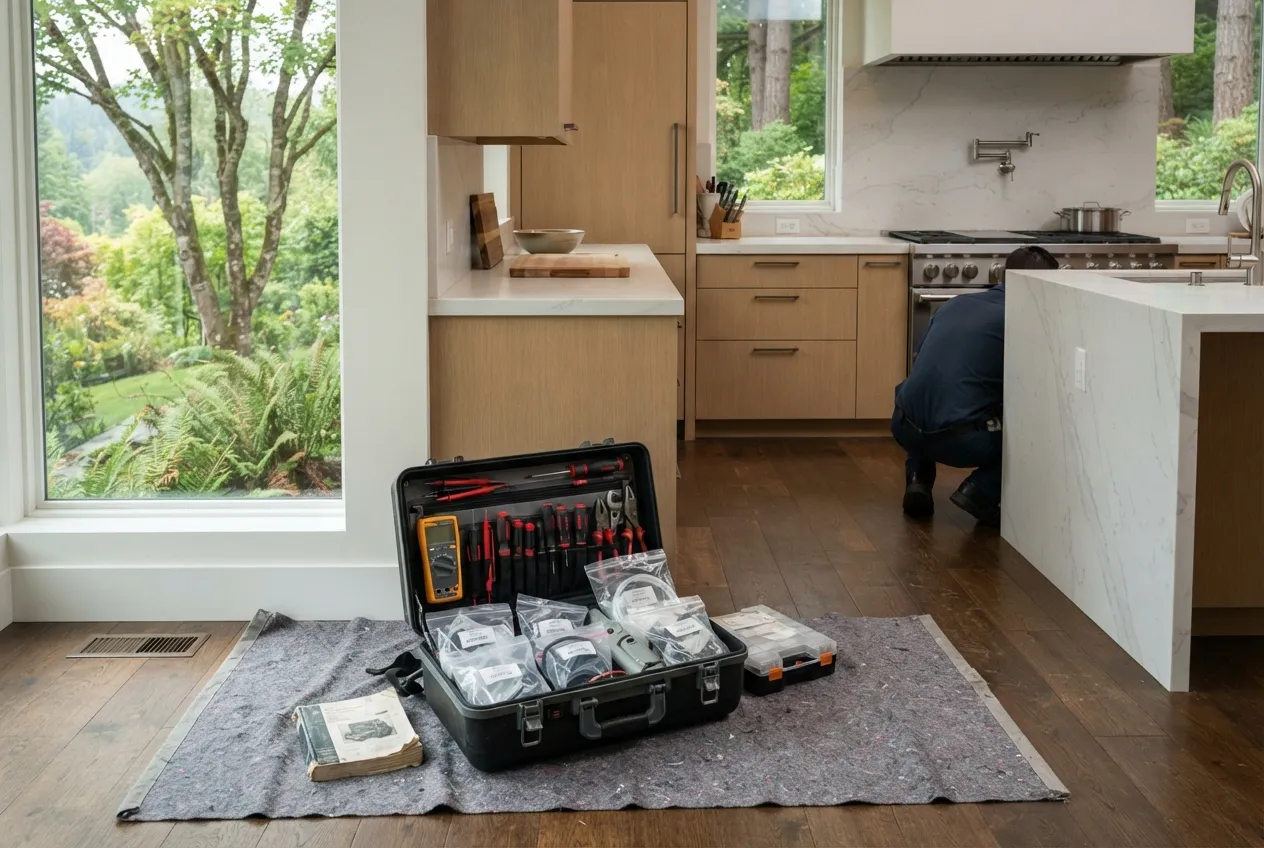
From there we measure actual temperatures in each zone and compare them with the setpoints. We test the temperature sensors (thermistors), the evaporator and condenser fan motors, the defrost components and the control board. We check door gaskets and hinge alignment, because a heavy custom panel can slowly pull a door out of square. We clear and test the condensate drain, and we listen to the compressor and check for signs of a refrigerant leak. Every finding is explained to you before any repair starts.
How Viking, Sub-Zero, Wolf and Thermador wine units differ
Viking undercounter wine cellars and beverage centers are common in San Jose kitchens. Because they sit low and draw air from the front, condenser fan and airflow problems come up often, as do worn door seals and hinge wear on frequently opened doors. Sensor faults that throw off one zone are another regular repair.
Sub-Zero wine storage tends to use dual or multiple zones with separate controls, so a single failed sensor or control issue can leave one zone off-target while the rest looks normal. Their tinted glass doors seal tightly, and a gasket that has lost its shape often shows up first as condensation or frost.
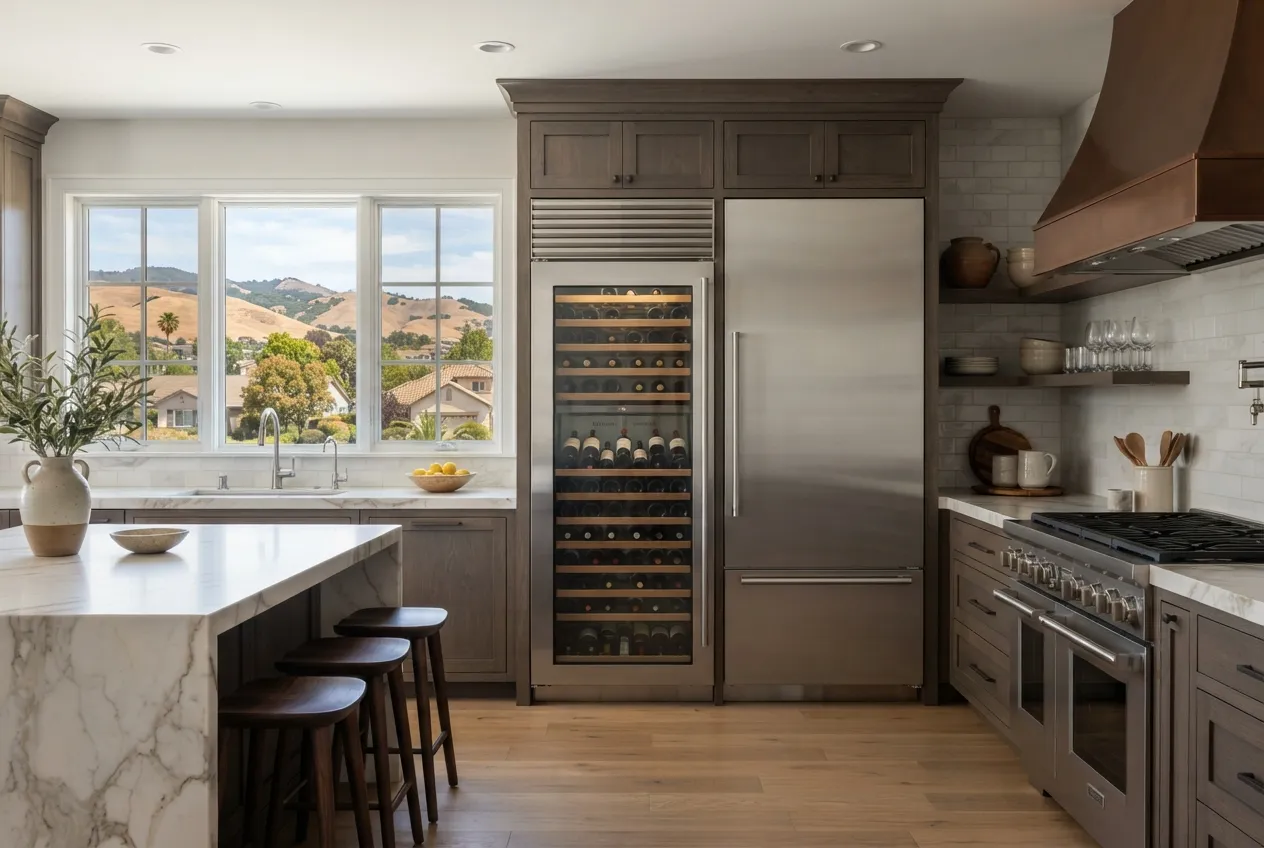
Thermador wine columns are usually fully integrated behind custom panels. Panel weight and door alignment deserve attention, and access to fans and controls can depend on how the column was installed. Wolf builds cooking appliances rather than wine storage, but many homes pair a Wolf range or wall oven with a Sub-Zero wine column. When a wine unit sits right next to a high-heat appliance, we check that heat and ventilation clearances aren't adding to the cooling load.
Tell us what your appliance is doing.
Repair or replace a high-end wine cooler
On premium built-in units, repair is usually the practical choice. The cabinet, door and installation are designed to fit a specific opening, and a replacement may not match your panels, trim or cutout without carpentry. Fans, sensors, gaskets, hinges, lights and control boards are all replaceable parts, and fixing them restores the unit you already paid to integrate.
Replacement is worth a serious look when the sealed system has failed on an older unit, when parts for that model are no longer available, or when the cabinet itself is damaged. We'll give you an honest assessment of the unit's condition and leave the decision to you.
What affects the cost of a wine cooler repair
We don't quote a price before we've seen the problem, because the range of possible causes is wide. The main factors are the fault itself, since a gasket or fan motor is a much simpler job than a sealed-system repair, and the parts involved, as control boards and sealed-system components cost more and some model-specific parts must be ordered.
Access matters too. A freestanding unit is easy to reach. A fully integrated column behind custom panels, or an undercounter unit that must slide out of tight cabinetry, takes more care and time. We explain the diagnosis and the repair cost before any work begins.
How a visit works
When you contact us, tell us the brand, model if you have it, and what you're noticing. A photo of the rating plate or any error code helps us bring likely parts. If the unit is warm, move bottles you care about to a cool, dark spot, but leave the cooler running unless it's leaking or making a burning smell.
At the appointment, the technician protects your floors and cabinetry, runs the diagnosis described above and walks you through what's wrong and your options. Many repairs are finished on the first visit. If a part has to be ordered, we schedule a return trip and tell you what to watch for in the meantime. Before leaving, we confirm the unit is cycling properly and the zones are heading toward their setpoints.