


The short answer
Most ice maker failures on high-end refrigerators and undercounter ice machines come from water supply, temperature, or drain problems, and they can usually be repaired without replacing the appliance. Our technician tests the water supply, the ice maker module, and freezer temperature first, then explains the fault and your options before any work begins.
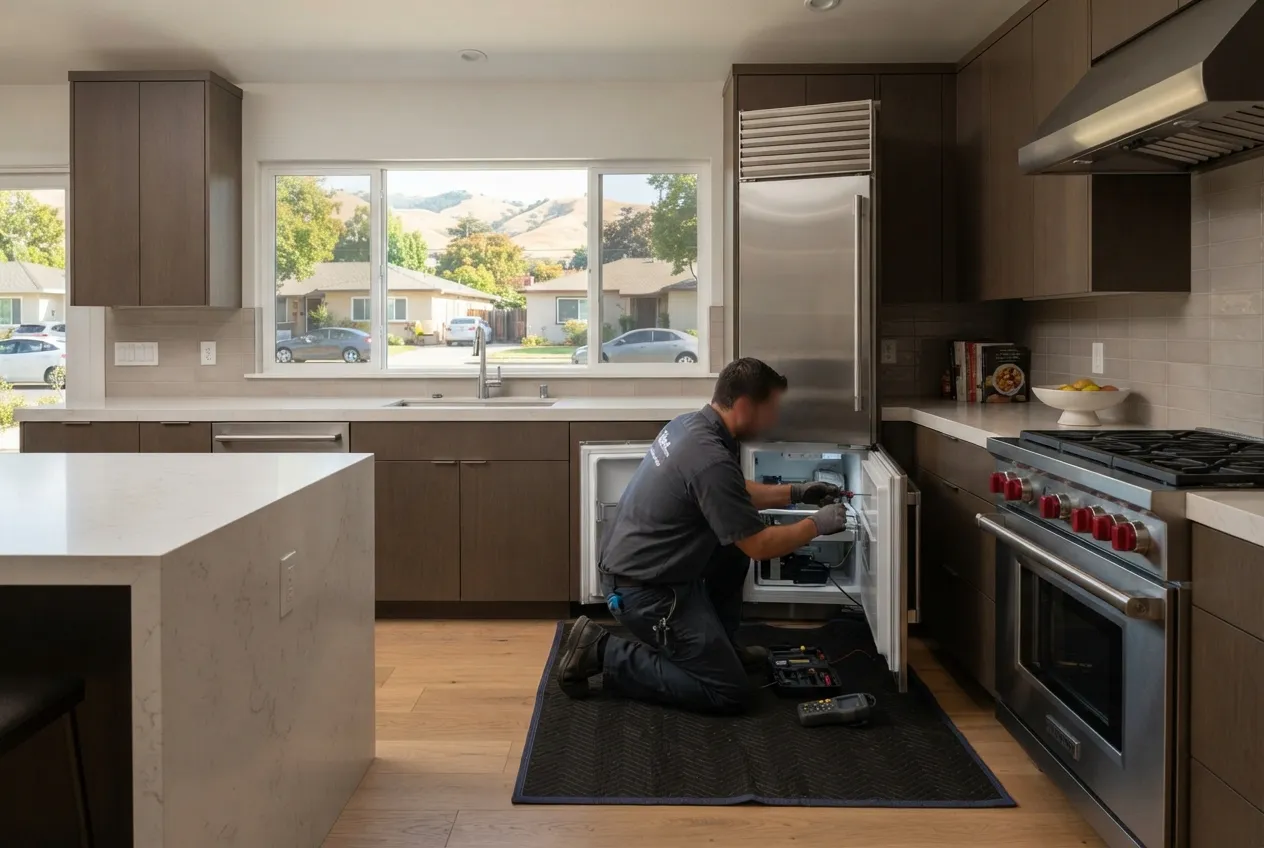
When an ice maker stops producing, the problem is usually small: a frozen fill tube, a tired water valve, a clogged filter, or a freezer running a few degrees too warm. On a built-in refrigerator or an undercounter ice machine, finding that small problem takes time and care because the unit sits inside custom cabinetry. Viking Repair Experts repairs ice makers in Viking, Sub-Zero and Thermador refrigerators and freestanding ice machines, including kitchens built around Wolf cooking appliances, for homeowners in San Jose and nearby cities. We are an independent repair company, not affiliated with any appliance brand.
Issues we fix
Ice makers tend to fail gradually. Owners often notice smaller cubes or a half-empty bin weeks before production stops completely. If you see any of the signs below, it is worth having the unit checked before a small leak or ice jam turns into a larger repair.
- No ice, or ice production that has slowed to a trickle
- Small, hollow, or misshapen cubes
- Ice that clumps together or freezes into a solid block in the bin
- Water leaking under the refrigerator or ice machine, or pooling on the bin floor
- Frost or ice build-up around the fill tube or ice maker
- Cloudy, off-tasting, or odd-smelling ice
- Water or ice dispenser that won't dispense, or ice that jams in the chute
- Undercounter ice machine that won't drain or keeps refilling
- Clicking, buzzing, or grinding sounds during the harvest cycle
- Error codes or flashing indicator lights on the control panel
What our technician checks on a built-in unit
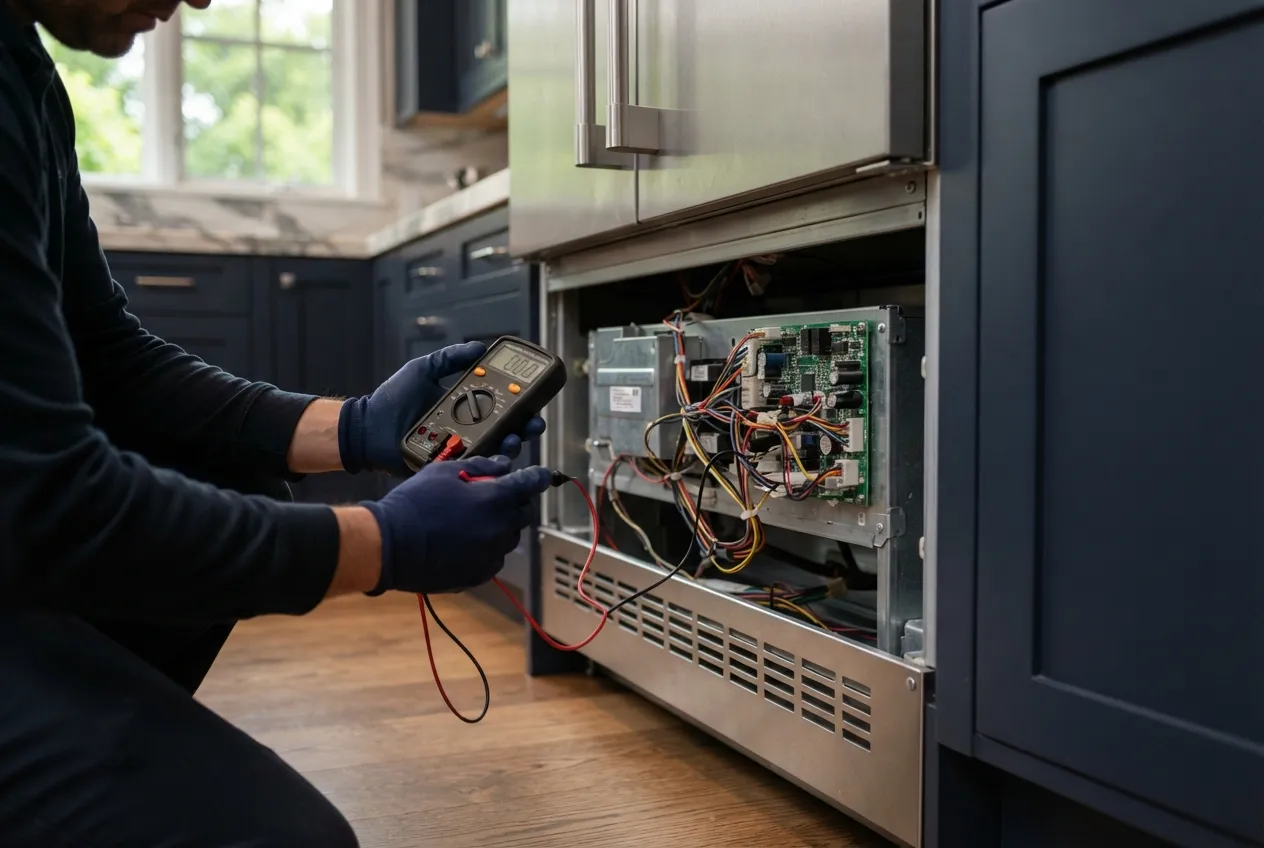
We start with the basics, because they cause a large share of ice maker complaints. The technician confirms that the household water supply is on, that pressure at the shutoff valve is adequate, and that the water filter is not overdue or clogged. Low water pressure alone can produce small cubes or no ice at all.
Next, we measure actual freezer temperature rather than relying on the display. An ice maker needs a cold enough compartment to complete its cycle, so a weak compressor, a failing evaporator fan, or dirty condenser coils can show up first as an ice problem. Condenser coils on built-in units collect dust quickly, and homes in the hotter inland and southern parts of the Santa Clara Valley put extra strain on cooling systems during dry summers.
Then we test the ice maker components directly: the water inlet valve, the fill tube and its heater, the ice maker module and its thermostat, the ejector or harvest motor, and the bin level sensor. On undercounter ice machines we also inspect the drain line, the drain pump if one is fitted, the water distribution system, and scale build-up on the evaporator plate. Finally, we check door seals and hinges, since warm air leaking into the freezer causes frost and clumped ice.
How Viking, Sub-Zero, Wolf and Thermador units differ
Viking built-in refrigerators and undercounter ice machines commonly come to us with water inlet valve problems, ice maker modules that stop cycling, and, on freestanding ice machines, drain issues that cause overflow or slow production. Scale from hard water can also coat the evaporator on clear-ice machines and reduce output.
Sub-Zero built-in and integrated refrigerators tend to show ice maker trouble through frozen fill tubes, worn water valves, and freezer temperature problems tied to dirty condensers or failing fans. Sub-Zero undercounter ice makers share the drain and scale concerns of other clear-ice machines.
Wolf makes cooking appliances rather than refrigerators, but Wolf ranges and ovens are so often installed next to Sub-Zero refrigeration that many of the ice makers we see sit in Wolf kitchens. If your Wolf range needs attention during the same visit, let us know when you book.
Thermador column refrigerators and freezers usually have the ice maker in a separate freezer column. Common issues include ice jams in the dispenser path, fill problems from low water pressure or filter restrictions, and ice maker modules that need replacement. Because columns are fully integrated, access is a bigger factor in the work.
Tell us what your appliance is doing.
Repair or replace on a high-end unit
On a premium built-in refrigerator, an ice maker problem is rarely a reason to replace the whole appliance. Ice maker modules, valves, fill tube heaters, and sensors are replaceable parts, and the refrigerator itself is built to be serviced. Replacing a built-in unit also means matching panel sizes and cabinet openings, which adds cost and disruption.
Replacement deserves a closer look when the refrigerator also has a sealed system failure, such as a refrigerant leak or a failed compressor, on an older unit, or when parts are no longer available for a particular model. In those cases our technician explains what failed, what the repair involves, and what tradeoffs you face, so you can decide with clear information.
What affects the cost of an ice maker repair
We can't quote a repair before diagnosing it, because several factors shape the cost. The first is the fault itself: replacing a clogged filter or clearing a frozen fill tube is a very different job from replacing an ice maker module or repairing a cooling problem. The second is the part, since some components are inexpensive while others cost more and may need to be ordered.
Access matters too. A fully integrated refrigerator or ice machine set into custom cabinetry may need to be carefully pulled forward, or have panels removed, before we can reach the water valve, drain, or condenser. Your technician reviews the diagnosis and the cost with you before starting any repair.
How a service visit works
When you contact us, tell us the brand, the model if you have it, and what you are noticing, such as no ice, leaking, or a specific error code. That helps the technician come prepared. We serve San Jose and nearby cities in the South Bay.
At the appointment, the technician inspects and tests the unit, explains what is wrong in plain language, and walks you through your options. If you approve the repair and the needed part is on hand, the work can often be completed that day. If a part needs to be ordered, we schedule a return visit. Before leaving, the technician confirms the ice maker is filling and cycling and shares simple tips, like filter changes and coil cleaning, to help prevent repeat problems.