


The short answer
Most outdoor grill problems, such as burners that won't ignite, weak or yellow flames, and uneven heat, come from igniters, valves, regulators, burners, or corrosion, and they are usually repairable on a high-end unit. Viking Repair Experts diagnoses built-in and professional-style grills on site in San Jose and nearby cities, then explains the fault and the repair options before any work begins.
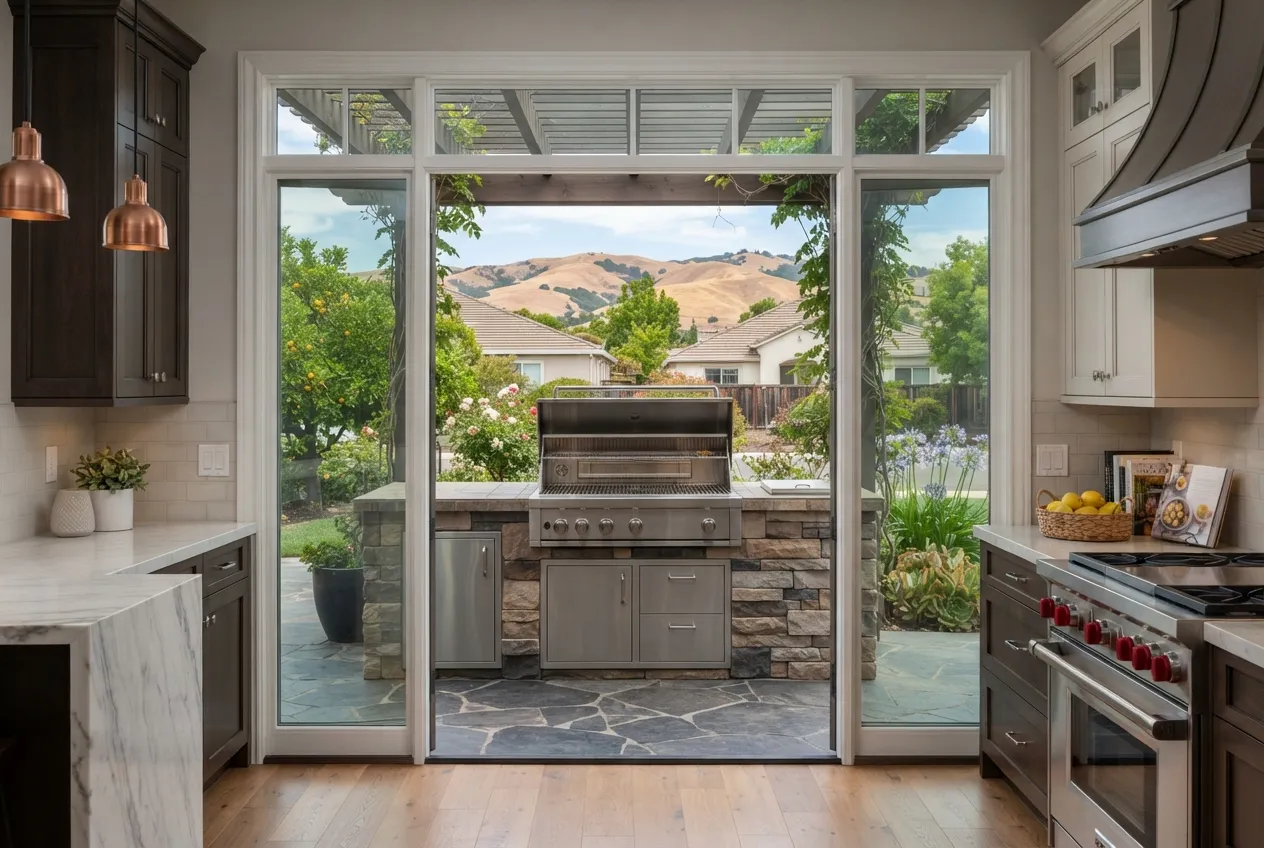
A built-in grill is often the center of the backyard, and when a burner won't light or the heat runs uneven, it can stall a whole weekend of plans. Viking Repair Experts repairs premium outdoor grills for homeowners in San Jose and nearby cities, with most of our work on Viking outdoor grills. We also service Wolf outdoor gas grills and the Sub-Zero refrigeration that often shares the same outdoor kitchen, and we work on Thermador indoor grill and griddle sections with the same approach. We are an independent repair company, not affiliated with any of these brands. On this page we explain what we fix, what we check, and how a visit works.
Issues we fix
These are the problems homeowners describe most often when they call about a built-in or freestanding premium grill. Several symptoms can share the same cause, so we look at the whole gas and ignition system rather than replacing the first part that looks worn.
- Burners that won't ignite, or an igniter that clicks without sparking
- Igniter that sparks but the burner still doesn't catch
- Weak, lazy, or yellow flames instead of a steady blue flame
- Uneven heat or hot and cold zones across the grates
- Grill that won't reach temperature, or runs hotter than the knob setting
- Infrared or sear burner that doesn't glow or heats only partly
- Rotisserie burner or motor that doesn't work
- Stiff, loose, or sticking control knobs and valves
- Flame that pops, rolls out the front, or burns behind the control panel
- Burned-out knob or interior lights
- A faint gas odor near the grill (shut off the gas supply first and contact your gas utility if the smell is strong)
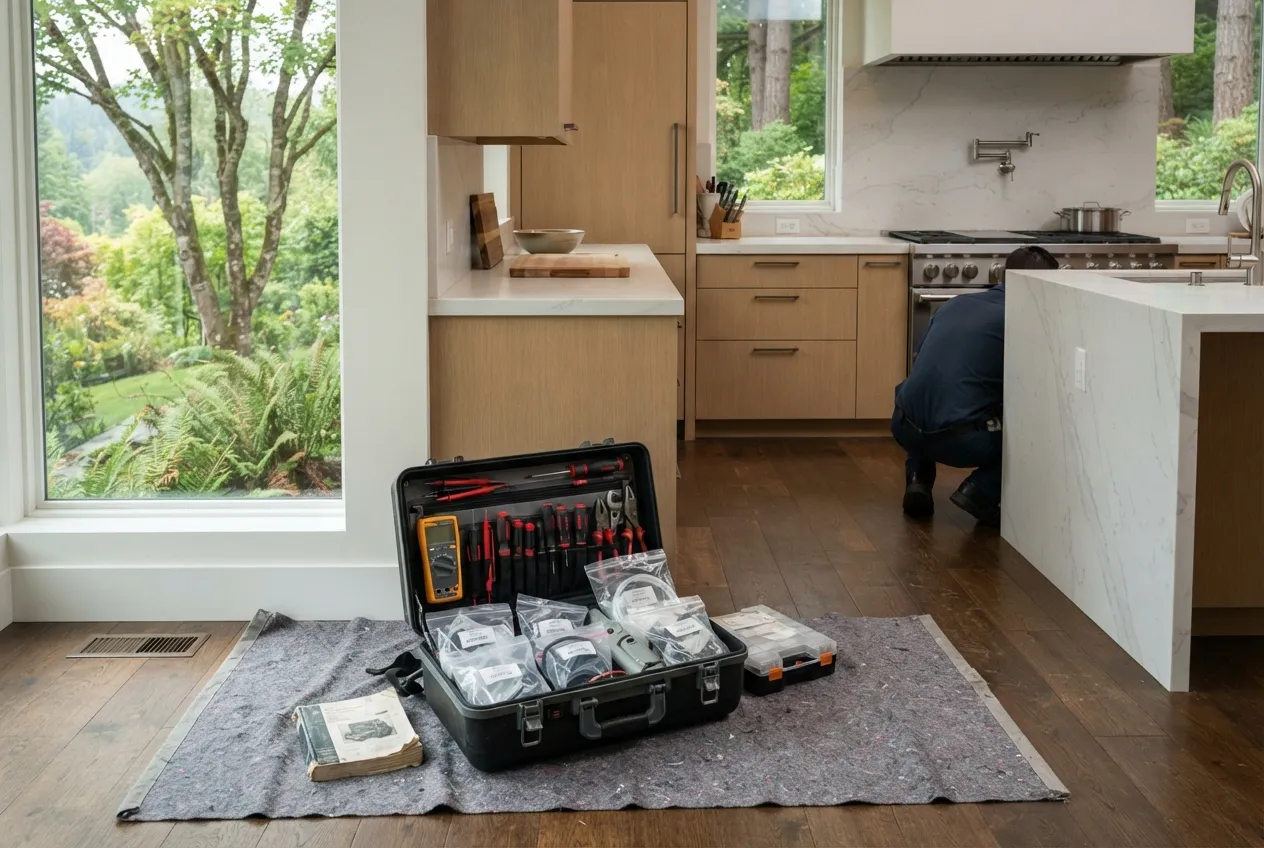
What our technician checks on a built-in or professional-style grill
We start by confirming the gas type and supply. A grill set up for natural gas behaves very differently from one running on propane, and a wrong orifice or a failing regulator can explain weak flames or low heat across every burner. We check supply pressure, the regulator, and the flexible connector or hard line feeding the unit.
Next we work through ignition: the igniter module, electrodes, wiring, and the battery or power source for the spark. Then we pull the grates and flame tamers to inspect the burners for corrosion, cracks, and clogged ports. Spiders and insects like to nest in burner tubes and venturis, which is a common cause of yellow flames and flashback. We also test each valve, check the thermocouple or flame safety device where the model has one, and look at the firebox, drip tray, and grease path.
In the Santa Clara Valley, dry summers and damp winters are hard on outdoor metal. Moisture settles into igniters and wiring over the rainy months, and grease buildup from summer cooking can cause flare-ups, so we note any corrosion or wear that may cause trouble later.
How Viking, Sub-Zero, Wolf and Thermador equipment differs
Viking outdoor grills are heavy, stainless, professional-style units, often with infrared sear burners and rotisseries. The parts we replace most often are igniter electrodes and modules, burners that have corroded after years outdoors, and valves that have stiffened. Rotisserie motors and backlit knob lighting also wear out over time.
Wolf outdoor gas grills use a sealed, high-output design with infrared rotisserie burners on many models. Ignition faults and wear on the rotisserie system are common service calls, along with burner and valve issues similar to other premium grills.
Sub-Zero doesn't build grills, but its outdoor refrigerators and undercounter units often sit right next to one. Heat from the grill and summer sun on the cabinet can push a refrigerator to run hard, so if your outdoor kitchen includes one that isn't cooling well, we can look at it during the same visit. Thermador grill and griddle sections are indoor equipment built into ranges and rangetops, and their ignition and burner faults follow much of the same logic as an outdoor grill.
Tell us what your appliance is doing.
Repair or replace a high-end grill?
On a premium grill, the stainless body, firebox, and frame usually outlast the parts that wear: igniters, burners, valves, and knobs. When those parts are still available, repair is often the sensible choice, especially for a built-in unit where replacement means fitting a new grill into existing masonry or cabinetry.
Replacement starts to make more sense when the firebox or housing has rusted through, when several major gas components have failed at once, or when parts for an older model are no longer made. We'll tell you plainly what we find, what the repair involves, and whether we think the grill has good years left, so you can decide.
What affects the cost of a grill repair
We don't quote prices before we've seen the grill, because the cost depends on a few specific factors. The biggest is the fault itself: cleaning a clogged burner port is a very different job from replacing a manifold or a set of valves.
Parts matter too. Original components for premium grills vary widely, and some older models need parts that take longer to source. Access is the third factor. A grill set into custom stone or cabinetry may need more time to remove or reach the valves, regulator, and gas connection than a freestanding cart model. We explain each of these after diagnosis and before any repair begins.
How a service visit works
When you contact us, we'll ask for the brand, model if you have it, the gas type, and a short description of what's happening. That helps us plan and bring likely parts. We serve San Jose and nearby South Bay cities and schedule a time window that works for you.
At the visit, the technician inspects the grill, tests the gas and ignition systems, and explains what's wrong in plain terms. You'll hear the repair options before any work starts. If parts are on hand, many repairs can be finished the same day; if a part needs to be ordered, we schedule a return visit to complete the job. Before leaving, we light and test every burner to confirm steady, even flames.