


The short answer
Most freezer problems on Viking, Sub-Zero and Thermador built-ins come from airflow, defrost, sensor or control faults, and most of them are worth repairing. Our technician confirms the cause on site and explains whether to repair or replace. The work is done on that visit or after parts arrive.
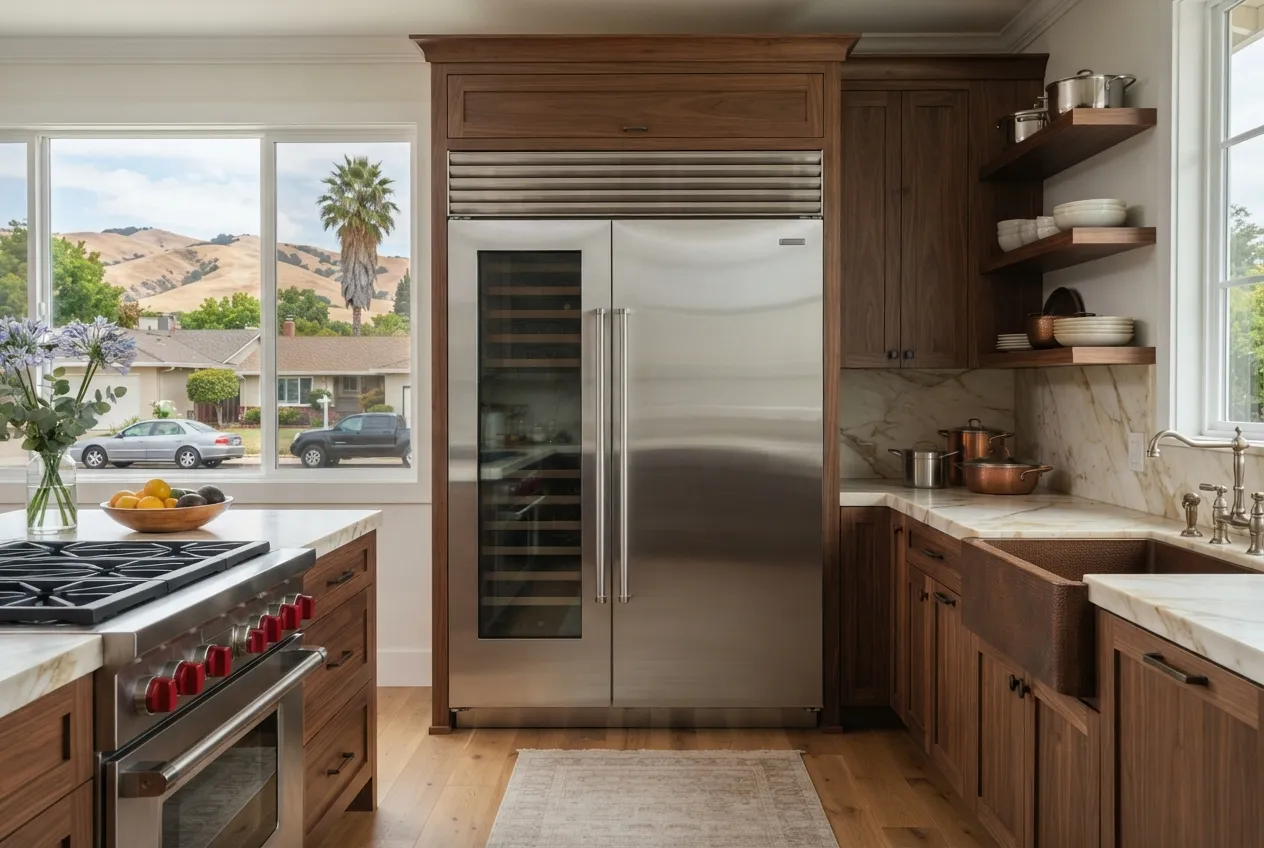
A built-in freezer that starts warming up gives you a short window before food is lost. Viking Repair Experts repairs premium freezers in San Jose and nearby cities. That includes Viking built-in and column units, Sub-Zero freezers and refrigerator-freezers, and Thermador column freezers. Many of our customers also cook on Wolf ranges, so we often look after the whole kitchen. We are an independent repair company, not affiliated with any manufacturer, and we find the actual fault before recommending parts. This page covers the symptoms we see most, what we check, how the brands differ, and what to expect from a visit.
Issues we fix
Most freezer problems show up as one of a handful of symptoms. Before you call, note what you see, when it started, and any codes on the display. That helps us bring the right parts on the first trip.
- Freezer not cold enough, or ice cream going soft while the refrigerator section seems fine
- Frost or ice building up on the back wall, around the door, or on stored food
- Ice maker not making ice, producing small or hollow cubes, or leaking water
- Water pooling under the unit, or ice forming on the freezer floor from a blocked defrost drain
- Error codes, flashing temperature readouts, or an alarm that won't clear
- Compressor running nonstop, cycling on and off rapidly, or not starting at all
- New noises, such as clicking, buzzing, grinding fans, or rattling from the condenser area
- Doors that don't seal, won't close fully, or drift open
- Dead display or controls even though the unit has power
What our technician checks on a built-in or column freezer
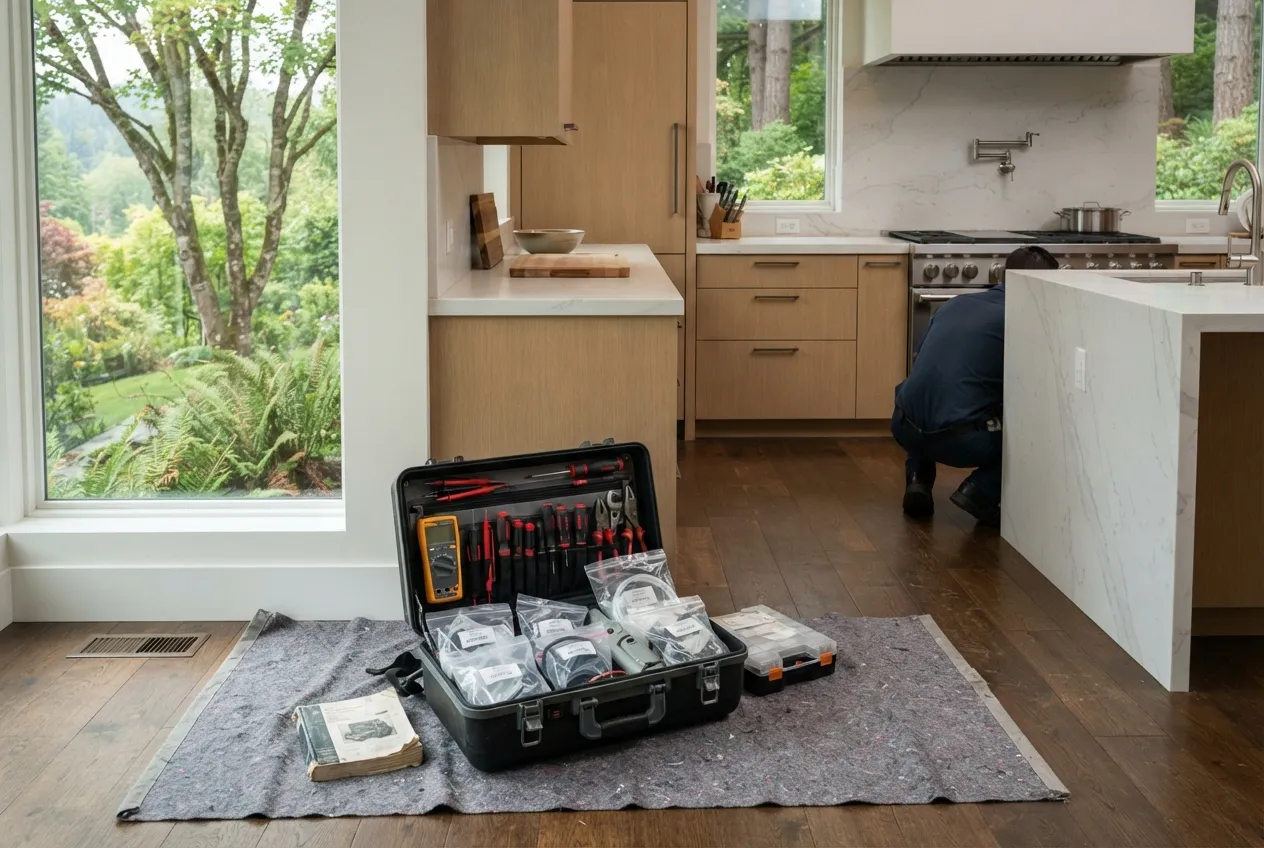
Built-in and column freezers sit flush with cabinetry, often behind custom panels. That puts the condenser, fans and controls in tight spaces at the top or bottom of the unit. Our technician first measures actual temperatures with a thermometer instead of trusting the display. Then they work through the refrigeration system in order.
Typical checks cover these parts: - The condenser coil and fan, which on many built-ins sit behind a top grille and collect dust and lint - The evaporator fan and coil behind the freezer's rear panel - The defrost heater, defrost sensor, and the control logic that runs the defrost cycle - The drain pan and drain line - Door gaskets, hinges and closers - Temperature sensors and the main control board - The ice maker, water valve and fill line - The compressor's start components and current draw
Summers in inland parts of the Santa Clara Valley run noticeably hotter than near the Bay, and a freezer in a warm kitchen works harder. A dusty condenser that got by in winter can turn into a warm freezer in August. That's why we check airflow and installation clearance on every visit.
How Viking, Sub-Zero, Wolf and Thermador freezers differ
Each brand builds its freezers a little differently, which changes what tends to need attention.
Viking built-in and column freezers rely on electronic controls and sensors. A warm Viking freezer can come from a failed sensor or control board just as easily as from a fan or defrost part. Heavy panel-ready doors also put wear on hinges and door alignment over time.
Many Sub-Zero models use separate refrigeration systems for the fresh food and freezer sides. So the freezer can fail while the refrigerator keeps working, or the other way around. Condenser cleaning, evaporator fans, ice makers and defrost components are common service points. Wolf doesn't make freezers. It is the cooking side of the same family, and kitchens with a Wolf range are often paired with Sub-Zero refrigeration. If you have both, we can look at them on the same visit.
Thermador column freezers are built for flush, panel-ready installs. Ice makers, water valves, door seals and electronic controls are typical service points. Columns are often installed side by side, so we also check whether heat or poor airflow around the pair is causing the problem.
With every brand, we confirm the failed part before ordering it, because a warm freezer can have several causes.
Tell us what your appliance is doing.
Repair or replace a high-end freezer
Premium built-in freezers are designed to be serviced, and replacing one is rarely as simple as buying a new unit. A new model may not match your cutout, panels or neighboring columns, so replacement can also mean cabinet work.
Repair usually makes sense when the cabinet, liner and insulation are in good shape and the fault is a fan, sensor, defrost part, gasket, ice maker or control board. Replacement deserves a closer look in a few cases: the sealed system has failed (the compressor, or a refrigerant leak in a hidden line), parts for an older model are discontinued, or the unit keeps needing major repairs. We'll tell you plainly which side of that line your freezer falls on, and why.
What affects the cost of freezer repair
We can't price a repair before diagnosing it, but these are the main factors.
We explain the diagnosis and your options before any work starts, so you can decide with the full picture.
- The fault itself: a clogged drain or dusty condenser is a much smaller job than sealed-system work
- Parts: control boards, compressors and ice maker assemblies vary widely, and some parts for older models are harder to find
- Access: freezers built into custom cabinetry, with overlay panels or tight surrounds, take more time to open up or pull out safely
- Sealed-system repairs: fixing refrigerant leaks or replacing a compressor takes more labor and equipment than swapping a component
- Follow-up visits: if a part has to be ordered, the repair is finished on a second trip
How a freezer repair visit works
Contact us with the symptom, the model, and any error codes, and we'll schedule a visit. If the freezer is warming, move food to a cooler or another freezer and keep the door closed as much as you can.
At the appointment, the technician checks temperatures, inspects the system, and explains the cause and your options. Common parts may be on hand. Others are ordered and installed on a follow-up visit. Before leaving, we make sure the freezer is cooling back down to temperature. We'll also point out anything, like regular condenser cleaning, that helps prevent a repeat. We serve San Jose and nearby South Bay cities.