


The short answer
Most warming drawer problems come from a failed heating element, a faulty thermostat or temperature sensor, a worn switch or control, or damaged slides and gaskets. These parts are usually repairable on Viking, Wolf and Thermador drawers, so repair is often worth it before replacing a built-in unit that is fitted to your cabinetry.
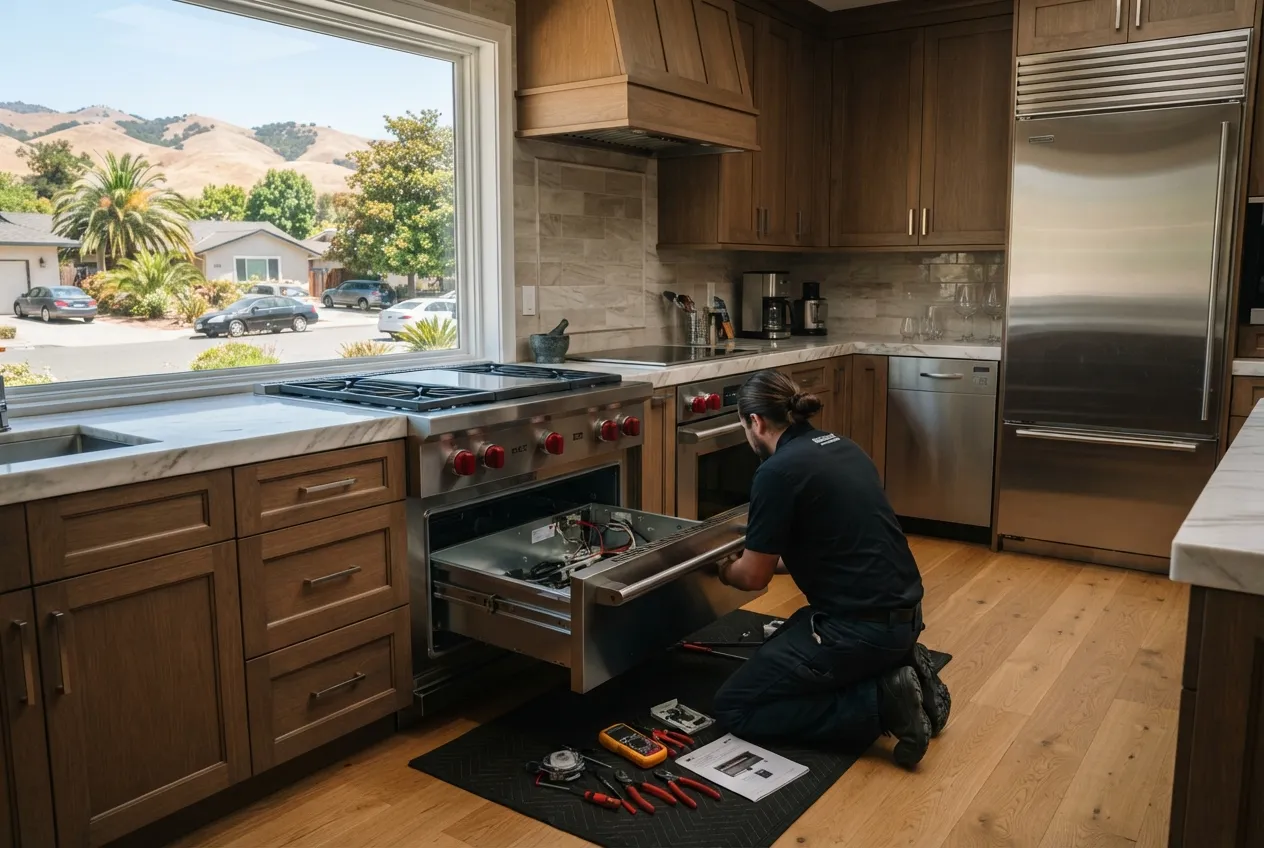
A warming drawer is easy to forget until it stops working. Then dinner rolls go cold, plates come out at room temperature, and the drawer you paid for sits idle under the oven. Viking Repair Experts repairs built-in and professional-style warming drawers in homes across San Jose and nearby cities. We work mainly on Viking, Wolf and Thermador drawers, including the drawers installed alongside Sub-Zero refrigeration in many South Bay kitchens. We are an independent repair company, not affiliated with any brand. Below is what we fix, what we check, and how a visit works.
Issues we fix
Warming drawers are simpler than ovens, but they still have a heating element, temperature control, a door seal, and drawer hardware that all wear over time. These are the problems homeowners call us about most often.
- Drawer does not heat at all, even though the indicator light comes on
- Drawer heats only slightly or takes far too long to reach temperature
- Uneven heat, with food hot in the back and cool near the front
- Drawer runs too hot or will not hold the temperature you set
- Indicator light, power light or display not working
- Controls or knob unresponsive, or settings that reset on their own
- Moisture or humidity setting that no longer makes a difference
- Drawer that sticks, drags, sags or will not close fully
- Torn or flattened gasket letting heat escape
- Tripped breaker or burning smell when the drawer is switched on
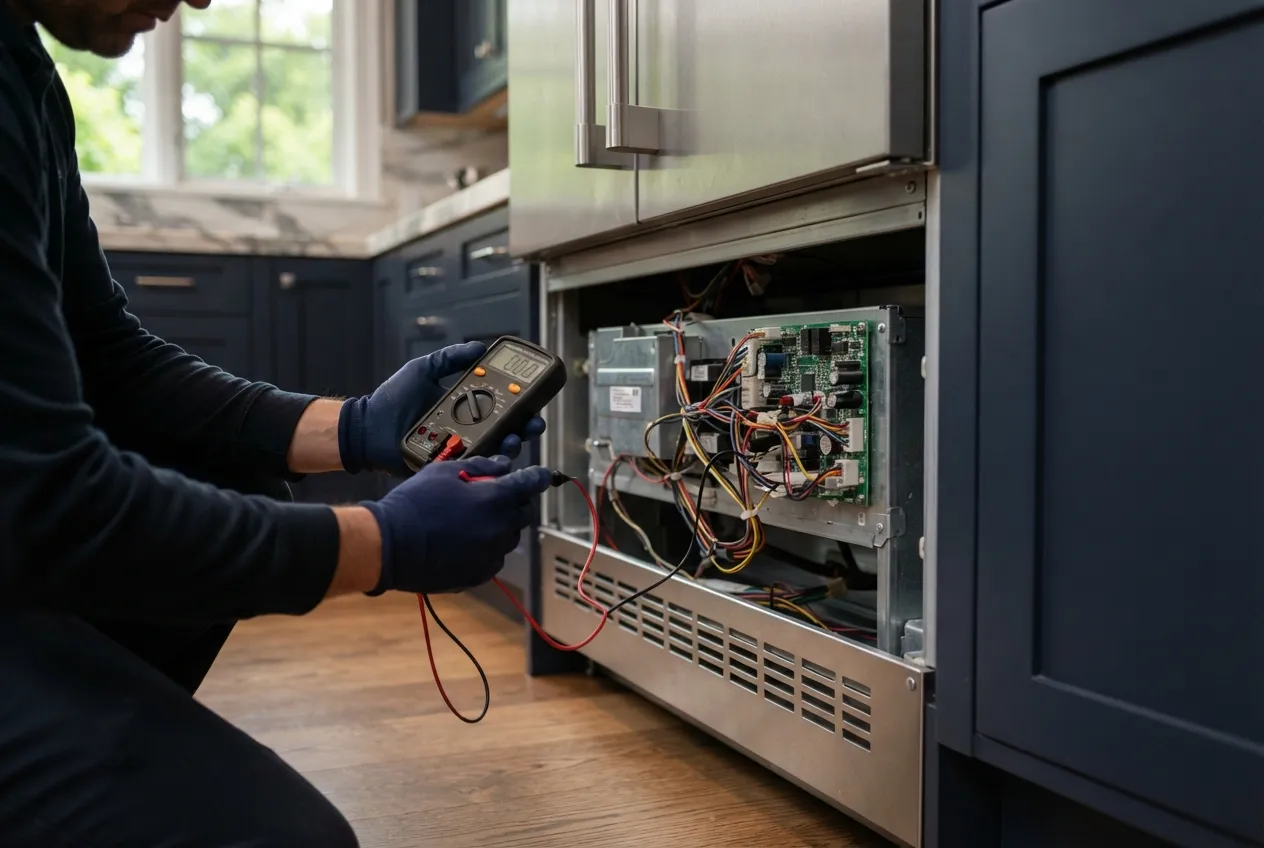
What our technician checks on a built-in or professional-style drawer
We start by confirming the problem with you and watching the drawer run. Then we work through the system in order instead of guessing at parts.
On the electrical side, we check power at the outlet or junction, the heating element for continuity, the thermostat or temperature sensor, the selector switch or control board, and the wiring connections behind the unit. Loose or heat-damaged connectors are a common cause of intermittent heating.
On the mechanical side, we inspect the drawer slides and rollers, the gasket around the opening, the vent or humidity control, and how the drawer sits in its cutout. A drawer that is slightly out of level can rub, fail to seal, and lose heat. We also look at the surrounding cabinetry for heat stress, since a sealing problem can affect wood finishes over time.
How Viking, Wolf, Thermador and Sub-Zero kitchens differ
Viking warming drawers are often paired with Viking ranges and wall ovens in a professional-style kitchen. On these drawers, we frequently see worn heating elements, tired thermostats and switches, and slides that need adjustment or replacement after years of heavy pans and dishes.
Wolf warming drawers tend to use electronic controls and are built to sit flush with Wolf wall ovens. Control and sensor faults are more likely to show up here, along with gasket wear on drawers that are opened many times a day.
Thermador warming drawers are commonly installed under Thermador wall ovens or in an island. Push-to-open mechanisms, control electronics and element failures are the usual suspects, and access can be tight because these drawers are often trimmed close to the cabinets.
Sub-Zero focuses on refrigeration, so a Sub-Zero kitchen usually has its warming drawer from Wolf or another brand. We service those drawers as part of the same kitchen, and we can look at your Sub-Zero refrigerator on the same visit if it needs attention.
Tell us what your appliance is doing.
Repair or replace a high-end warming drawer?
In most cases, repair makes sense. The parts that fail most often, such as elements, thermostats, switches, gaskets and slides, are replaceable without changing the drawer itself. A built-in drawer is also sized to a specific cutout and finished to match your panels or appliances, so replacing it can mean extra cabinet work or a finish that no longer matches.
Replacement is worth considering when the drawer body is damaged, when key parts are no longer available, or when the drawer has had several major repairs and others are likely soon. We will tell you plainly which situation you are in and let you decide.
What affects the cost of a repair
We do not quote a price before we know what is wrong, because the range of possible faults is wide. A few factors make the biggest difference.
- The fault itself: a loose connection or slide adjustment is a smaller job than a control board replacement
- Parts: availability and cost vary by brand, model and age, and some parts must be ordered
- Access: drawers set in custom cabinetry, islands or under wall ovens can take more time to remove and reinstall safely
- Related damage: heat-damaged wiring or a bent drawer frame adds to the repair
How a visit works
When you contact us, we ask for the brand, model if you have it, and what the drawer is doing. That helps the technician bring likely parts. We serve San Jose and nearby cities in the Santa Clara Valley.
At your home, the technician diagnoses the drawer, explains what failed, and gives you the repair cost before any work begins. If the needed part is on hand, we can often finish the same visit. If it has to be ordered, we schedule a return trip once it arrives. Before leaving, we test the drawer at temperature and check that it opens, closes and seals properly.